11 weeks
Winter 2025
People with ADHD often struggle with time blindness, meaning they have unreliable internal clocks. This leads to poor time awareness.
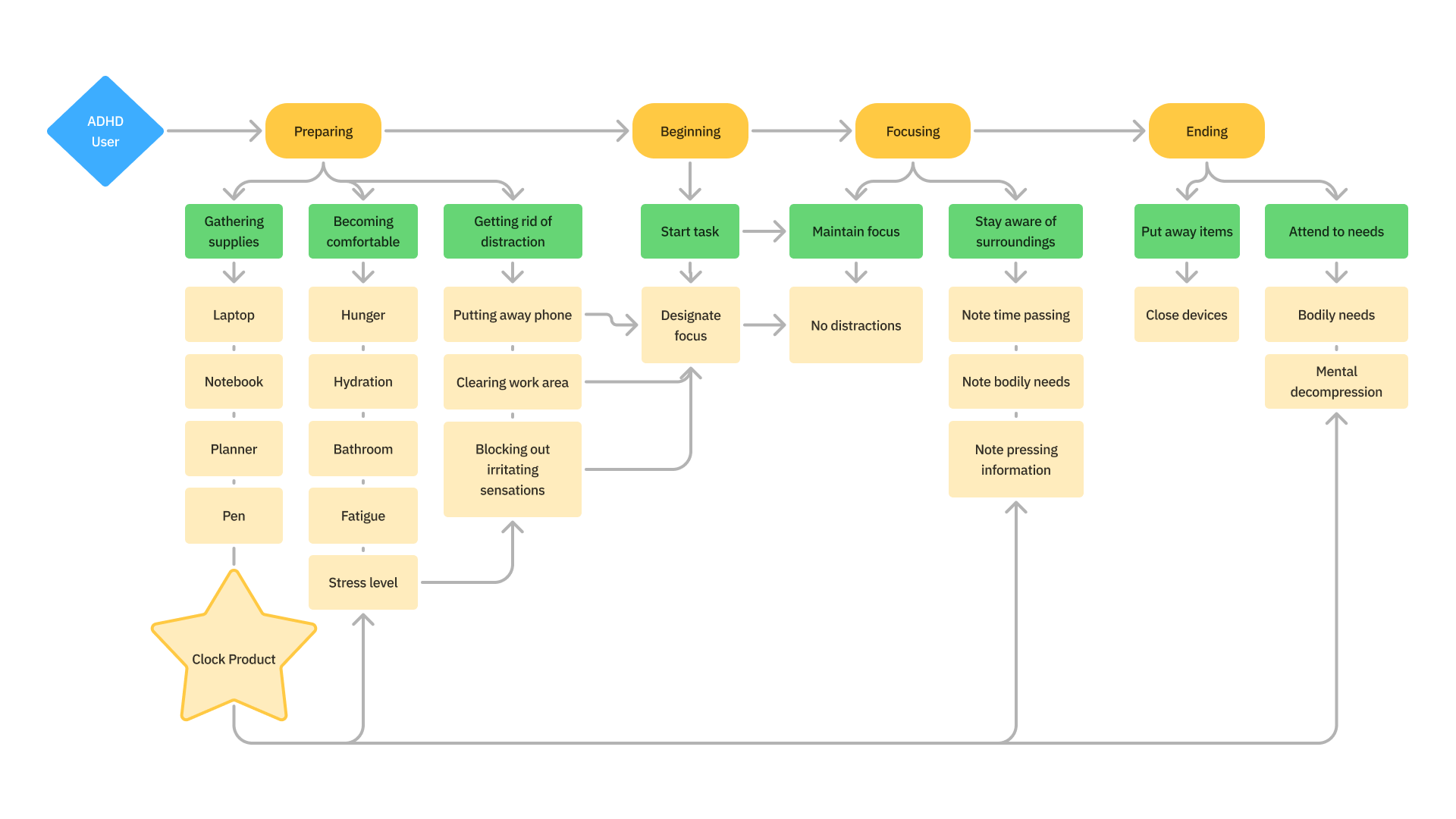
For ADHD users, many clocks can either create stress, not have high enough visibility, or not have an intuitive representation of time.
“I don’t like when I allot myself a certain amount of time to a task and then can see myself going over time.”
Mia, 51
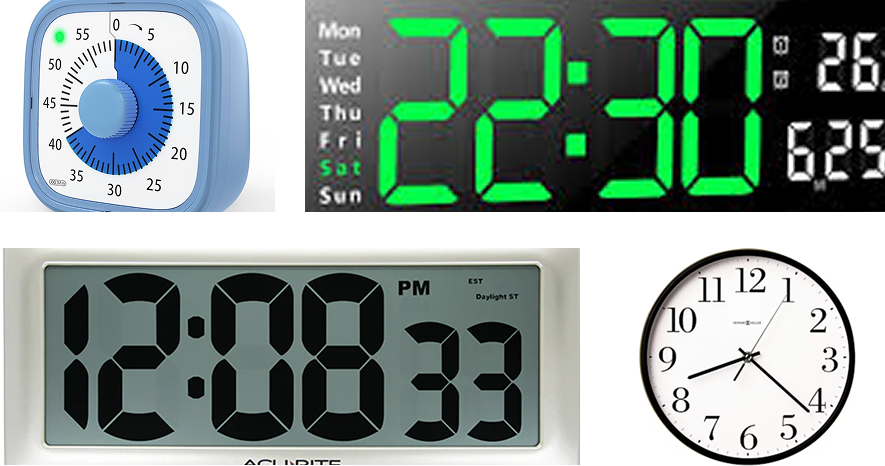
Insight 1: Stress creates distraction.
“It helps me keep track of time passing if the sun comes up or goes down while I’m in the middle of a study session.”
Ray, 21
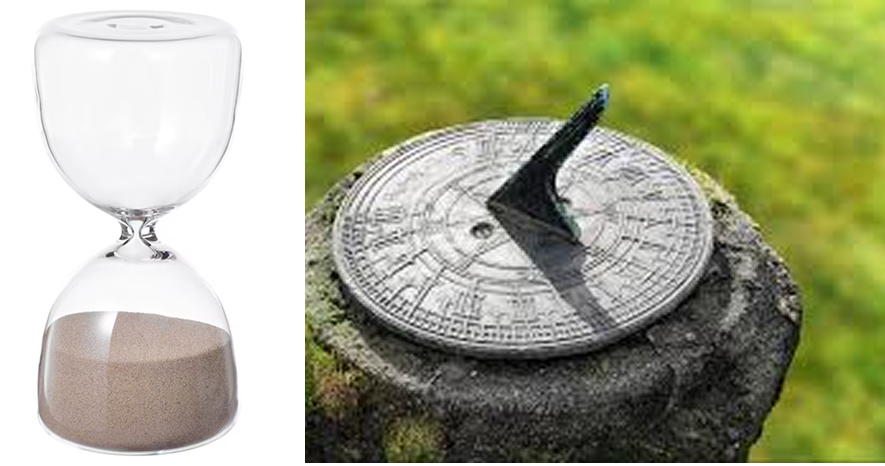
Insight 2: Constant visibility is key.
“I like to have clocks in every room so I don’t always have to look for my phone.”
Matt, 23
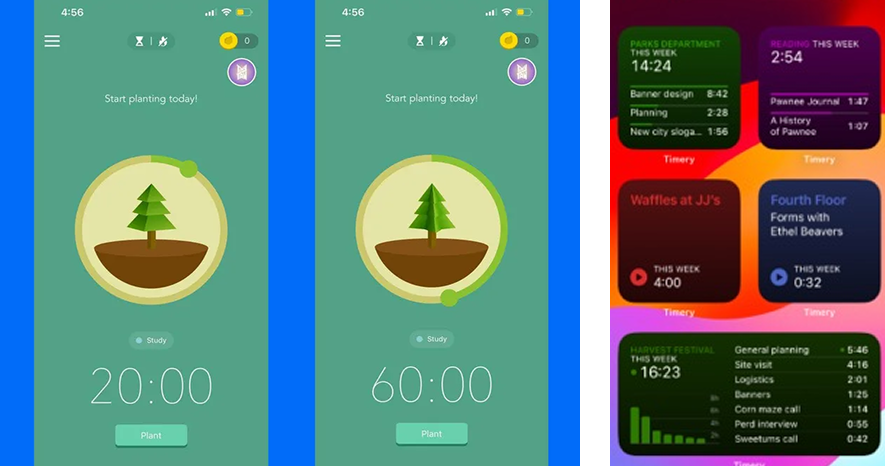
Insight 3: Classic screens break focus.
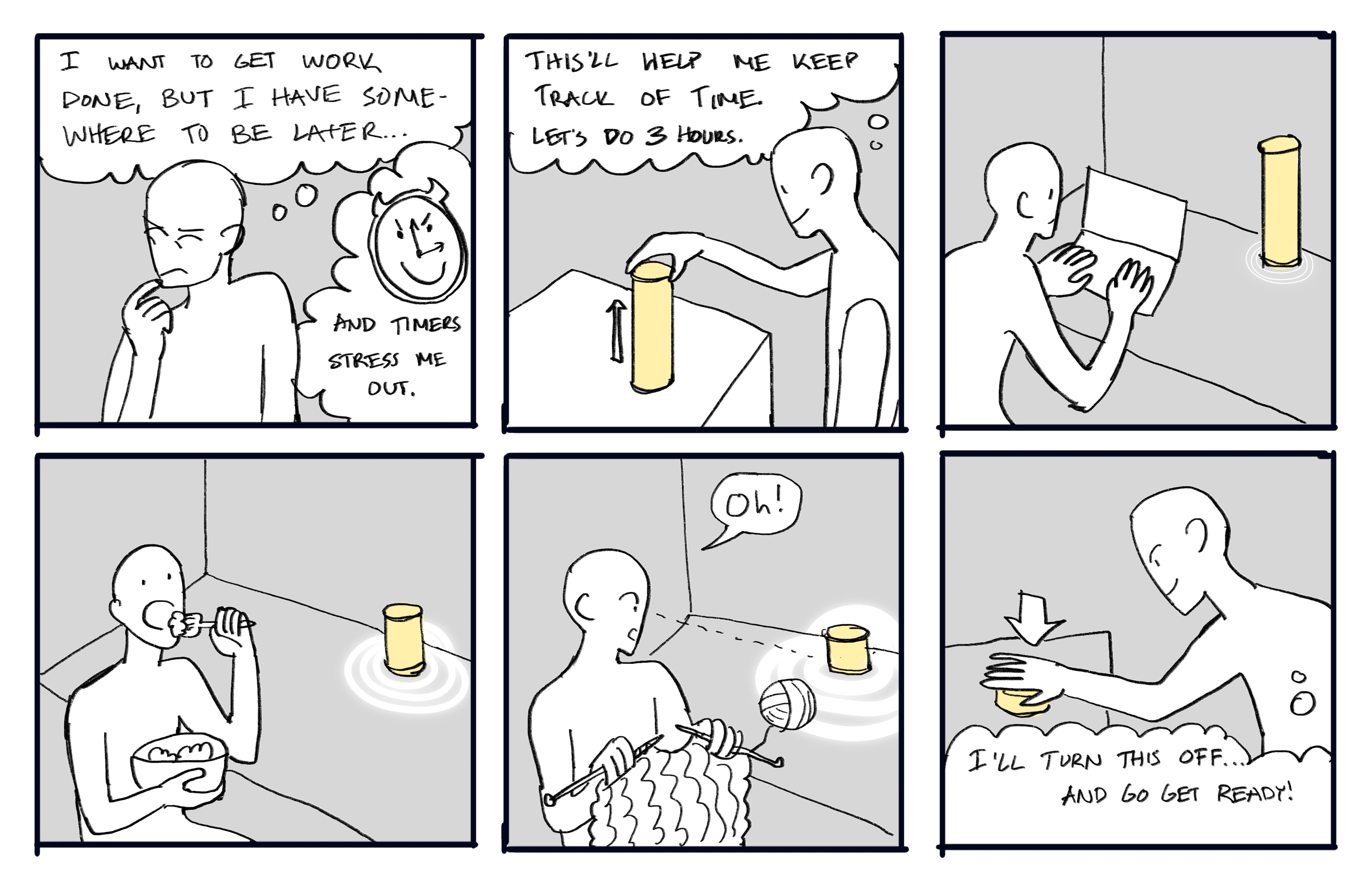
While exploring processes that intuitively show passage of time, I determined the interactions and physical features I wanted to include. In order to make the changing of time be both understandable and unobtrusive, I involved light and vertical height change, and physical interaction during the time-setting stage.

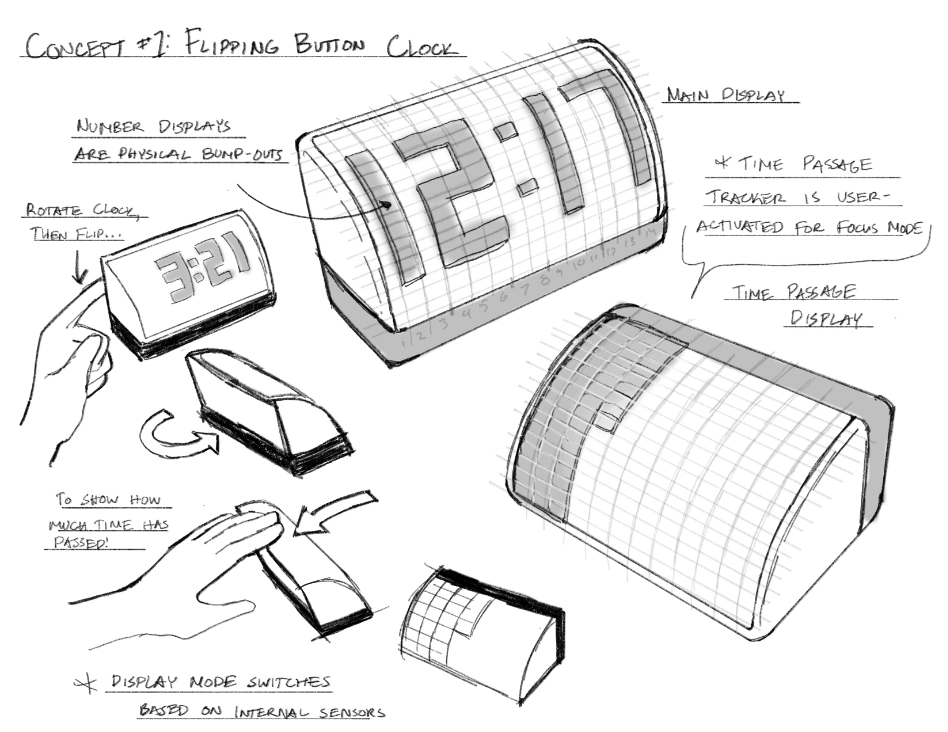
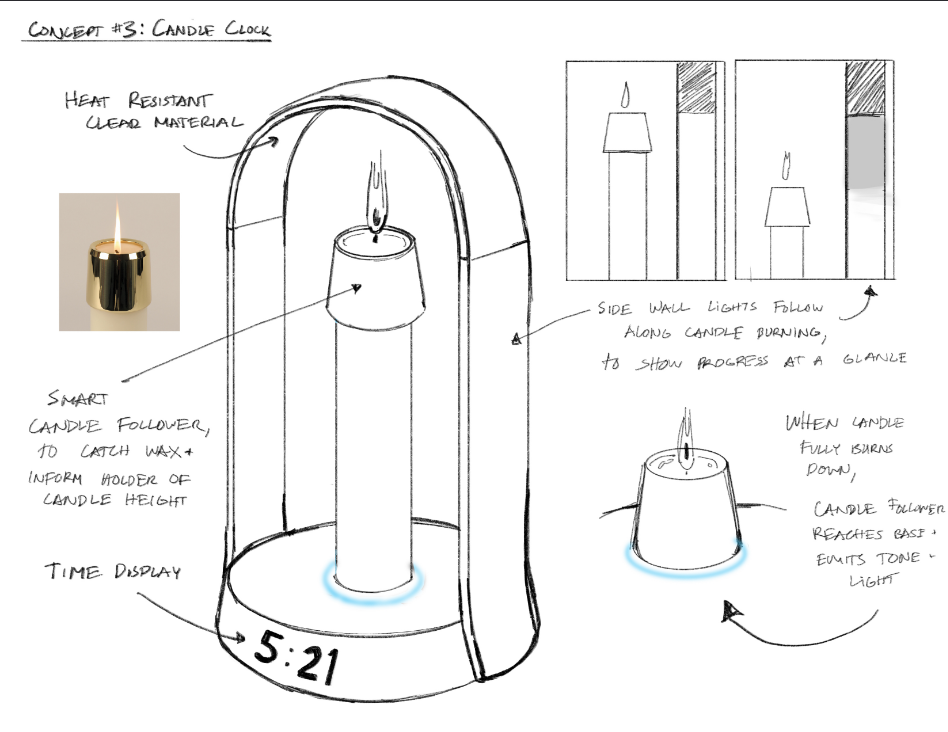
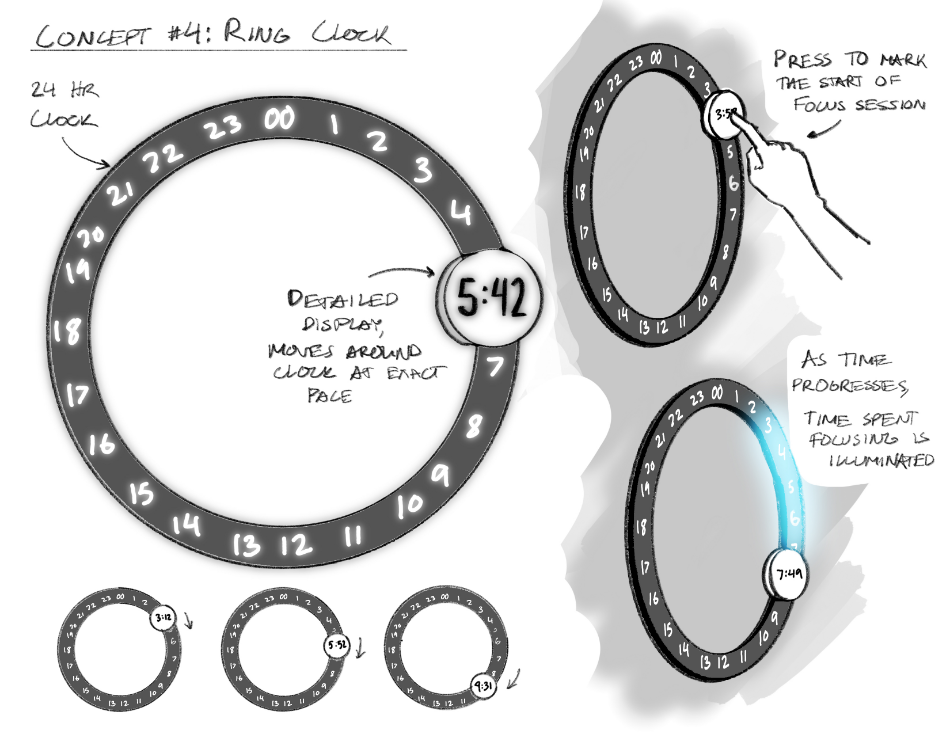
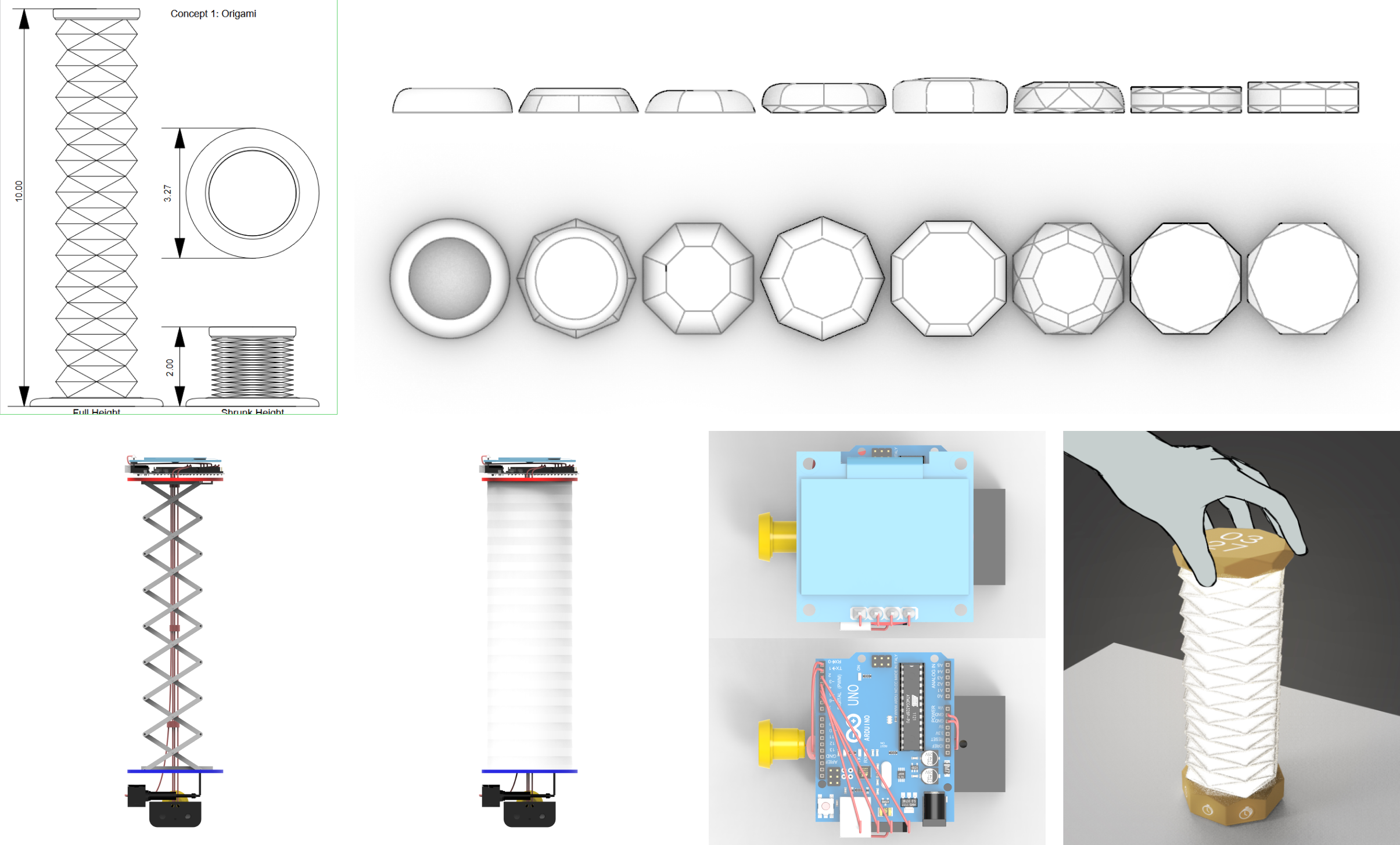
While searching for objects that evoke a sense of calm and cleanliness, I found inspiration in paper lamps and origami that interacted with light.

Physical prototyping involved a range of materials for both the pucks and flexible shell. I experimented with hand-folded paper and laser cut polypropylene for the flexible shell, and 3D printed PLA and wood for the pucks.
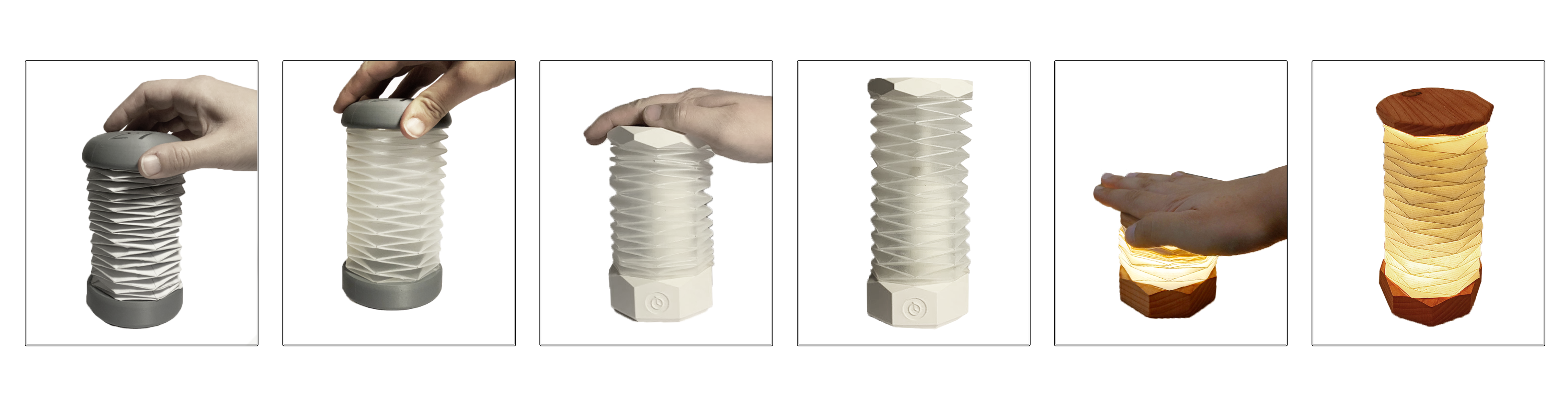

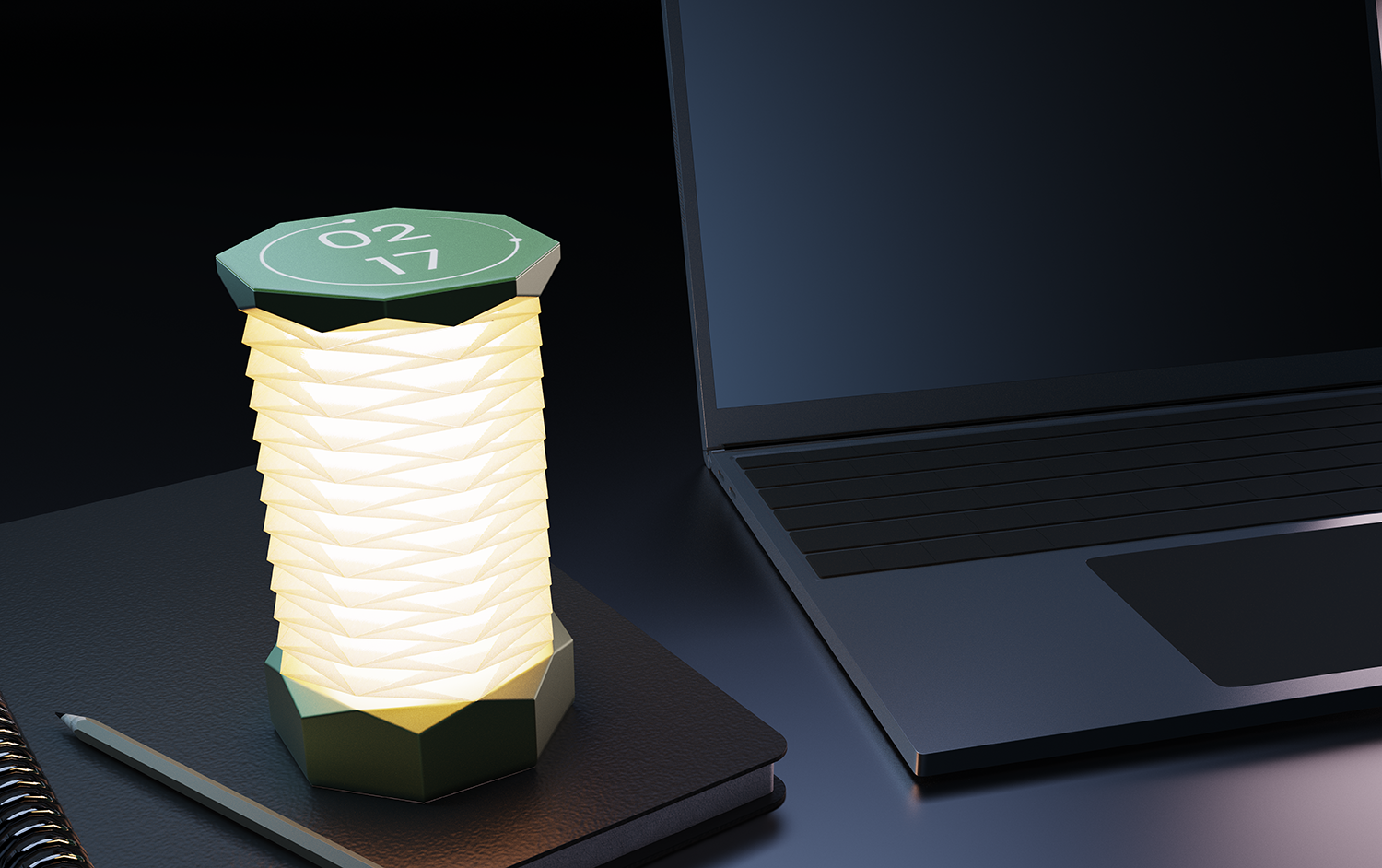
To use as a timer, users pull up the top section until the desired duration of time is displayed on the top face. The Towerclock will then shrink at this rate, allowing the user to understand at a glance how much time has passed based on its height.

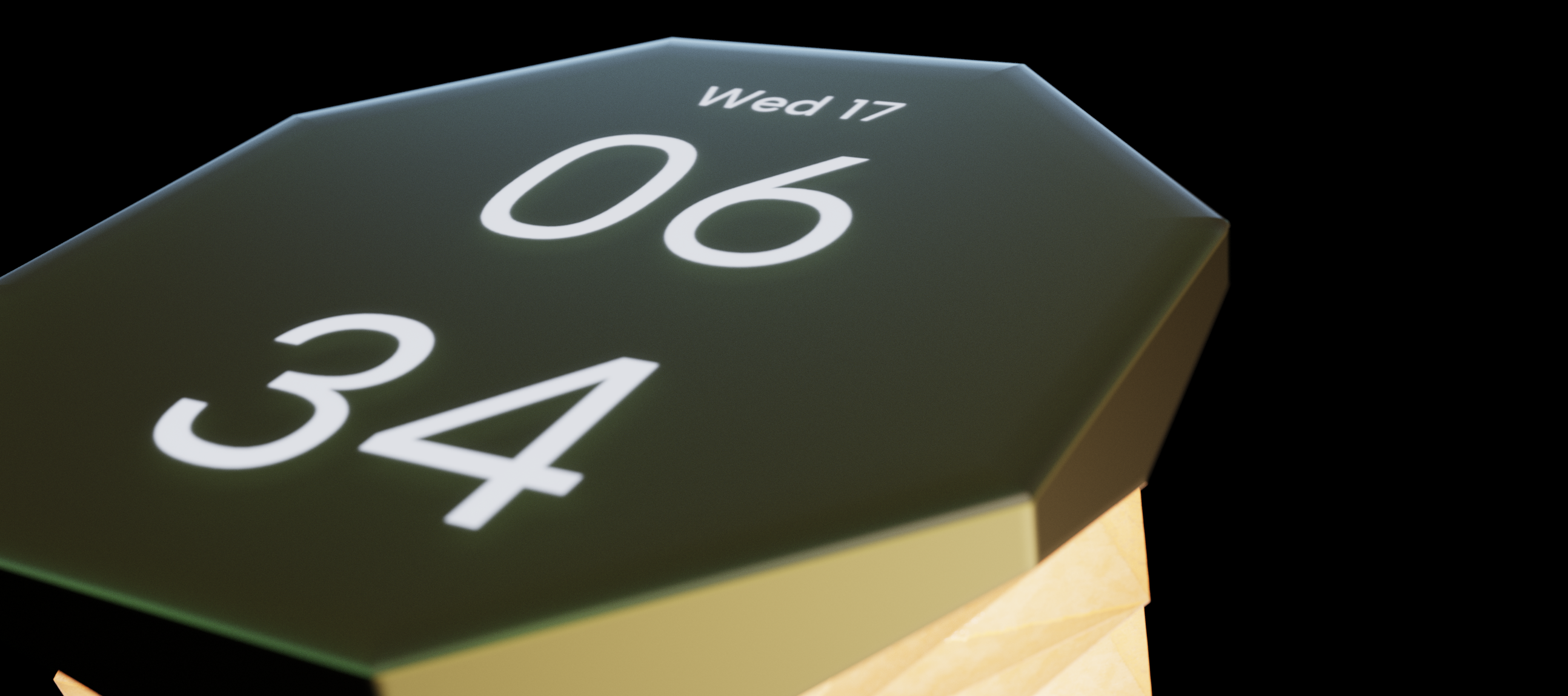
When the Towerclock is in clock mode, it will display both the time and date. When being used as a timer, it will show the remaining time both numerically.